
A brand is how a company differentiates itself from its peer brands. A brand can be thought of as the personality of the company, communicated through an identifying mark, logo, name, tagline, voice, and tone. Some of the oldest and most recognizable brand names in automotive, toys, and food and beverage have been around for decades, with some surpassing more than a century of consistent and recognizable branding.
There are three main types of brands, including company/corporation brands, product brands, and personal brands, which apply to individuals. The rules of brand marketing apply, regardless of type. Now that we know what a brand is, let’s talk about how to create a brand marketing strategy.
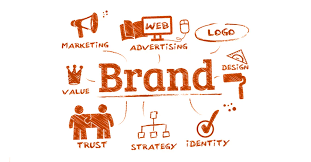
brand marketing
What is brand marketing? A complete guide
Brand marketing is promoting a brand’s products or services in a way that elevates the brand as a whole. It involves creating and maintaining brand-consumer relationships and marketing brand attributes—the traits that people think of when they picture a particular brand. In this guide, we’ll provide an overview of all things branding, including brand marketing strategy, types of brands, brand awareness, brand equity, brand relevance, and brand recognition, as well as highlight branding solutions from Amazon Ads.
What is a brand?
What is brand marketing?
Brand marketing is the process of establishing and growing a relationship between a brand and consumers. Rather than highlighting an individual product or service, brand marketing promotes the entirety of the brand, using the products and services as proof points that support the brand’s promise. The goal of brand marketing is to build a brand’s value – and the company’s value as a result.
The channels available for a brand marketing strategy are the same channels that companies can use for product marketing activities, such as digital, social, and paid search advertising. A good strategy is to use different channels together to create a media mix that reaches a wide audience. For example, brand marketers might use a brand advertising strategy supplemented by email and content marketing efforts to drive brand awareness and reach potential customers across multiple digital spaces. But when it comes to deciding the right messages for the right audiences in these spaces, we first have to consider brand attributes.
What are brand attributes?
Just like people have their own unique combinations of personality traits, brands have unique attributes, as well. Attributes are identifiers that consumers see as part of a brand. These can include the name and tagline, colors, or even music or sounds often associated with the brand. In addition, attributes can be the feeling that a brand evokes. Example “feeling” attributes include authentic, innovative, dependable, honest, or transparent.
What is brand equity?
Brand equity is the value of a company’s brand, or the measure of consumers’ perceptions of the brand. Strong brand equity has to do with how well consumers know the brand, their preference for it over others, their level of connection with the brand, and their level of loyalty to it. Strong brand equity opens doors for brands to innovate and expand their businesses with the support of their loyal base of consumers.
Brand equity is measured by comparing brand awareness, brand loyalty, preference, and financial metrics.
- Brand awareness is determining how many consumers are aware of a brand, and is measured through surveys and focus groups, social listening tools, and search and web traffic insights.
- Brand loyalty is measured using purchasing behavior insights like repeat purchase behavior and time between purchases.
- Brand preference is measured through insights such as purchase intent metrics and surveys.
- Financial metrics relate to sales lift as a result of brand marketing campaigns.
In order to build strong brand equity, it’s important to establish a strong brand-consumer relationship.
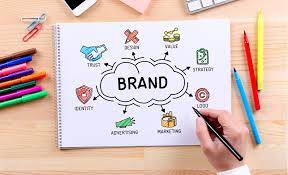
What is a brand-consumer relationship?
The brand-consumer relationship, also called the consumer-brand or brand relationship, is how well a brand and consumers are connected. Is it a strong connection or a weak one? A positive connection or a negative one? Are consumers functionally connected to the brand or are they emotionally invested in it? The best brand connections are strong, positive, and emotionally rooted. These are the connections that help turn buyers from one-time purchasers into lifelong brand advocates.

Why is branding important ?
Branding is perhaps more important than ever as marketplaces become more saturated and it becomes harder to make genuine connections with consumers. Branding allows companies to tell their unique stories and shift perception by giving customers something to believe in. It sparks interest, and invites customers to discover, learn about, and establish a memorable relationship with their brand. Rather than specs and features, branding is about what a company stands for – who it is at the core. Branding is about making consumers feel good about supporting a company and establishing an emotional connection. Those that brand effectively create a lasting impression that helps grow advocacy and loyalty among customers for the long term.
Digital Marketing
Digital Marketing
Digital marketing is the use of digital or social channels to promote a brand or reach consumers. This kind of marketing can be executed on the internet, social media, search engines, mobile devices and other channels. It requires new ways of marketing to consumers and understanding the impact of their behavior. Here you will find a collection of research insights and Marketing News articles regarding digital marketing.
Top Website Translation Trends for Digital Marketers 2023
The rise of ChatGPT and AI tools have accelerated the need for machine learning in translation. Learn about the top trends in website translation in 2023 below.
The technological landscape of the 21st century is almost unpredictable, considering how far we’ve come within the first 20 years. And this is highlighted by the mass adoption of AI in the past 6 months.
Website translation does not just rely on humans anymore, and we have tools that are making the process faster and less costly without sacrificing quality. If you’re managing or planning a website translation project, these are the top trends and services available to you.
Trend #1: AI is Here and It’s Here to Stay
There’s no question that artificial intelligence has changed the landscape of business and technology forever. More companies are using it, and the most successful companies in the translation industry are going to be the ones that leverage artificial intelligence to reduce translation costs at scale without sacrificing translation quality.
Let’s look at today’s trendy AI translation tools: Google Translate and ChatGPT. As an LLM, ChatGPT can assist with website translation in several ways.
- Providing Machine Translation: ChatGPT can be used to provide machine translation of website
content in various languages. By inputting text from the website into the model, it can generate
a rough translation that can be used as a starting point for further editing by a human translator. - Answering Language Questions: ChatGPT can be used to answer language questions related to the website’s content or translation. For example, if there is a word or phrase that needs
clarification, the model can provide additional context and explain its meaning. - Proofreading and Editing: ChatGPT can be used to proofread and edit translations to ensure
accuracy and consistency across the entire website. The model can identify errors, suggest
corrections, and provide alternative phrasing for translations.
Google Translate goes slightly beyond ChatGPT. It’s a Neural Machine Translation (NMT) service that offers a website interface, a phone app for Apple and Android, and an API that allows websites to feature browser extensions. Google Translate has been used since 2006 primarily as a real-time translation tool but does have functions as a website translation service. However, it doesn’t do anything beyond word-for-word translation. Without human editing or algorithmic review, it can’t learn and improve its outcomes. It also can’t provide website localization or personalization depending on region or business.

Trend #2: Adaptive Translation™
AI Translation is not limited to Google Translate and ChatGPT. But what is Adaptive Translation™? The new addition to the MotionPoint Platform consists of three components:
- Translation Memory
Translation memory (TM) is a type of software tool used by professional translators to assist in the translation process. A translation memory is a database that stores segments of previously translated text (such as sentences or paragraphs) alongside their corresponding translations. With MotionPoint’s Adaptive Translation™ your translation memory database helps you localize your web content by providing recommended translations for words or phrases that have already been translated. - Artificial Intelligence
Artificial Intelligence detects word use, sentence structure, and intent using an artificial neural network called Neural Machine Translation (NMT), which enables deep-learning and translation quality benefits. There are two distinct types of NMTs, both useful in different cases. - Generic NMT
A Generic NMT is what we know Google Translate to be. It is an AI tool that can produce
accurate, word-for-word translations in real time. Though the translations may be
correct, it is not capable of localizing or customizing based on brand guides or local aspects. - Brand-Adaptive NMT
Brand Adapted NMT is trained and tuned to each customer’s vernacular and
preferences. It uses existing translation memory data, domain-relevant datasets, and
MotionPoint’s proprietary data processing pipeline to provide businesses with custom
NMT translations that better match their brand voice in other languages. - Algorithmic Translation
Algorithmic Translation identifies and provides human quality translations for repetitive patterns and terms such as those commonly found on websites with dynamically generated content, such as personalization or product catalogs. This helps you deliver faster, more accurate human quality translations across your website while reducing costs. For some customers, Algorithmic Translation alone handles over 80% of the ongoing translations required to maintain localized websites. These translations would otherwise be assigned for costlier human translation or machine translation with post edit workflows. - Post-Editing
AI Translation has come a long way, but with optional post-human editing, companies can ensure the best translation quality. The first three layers of translation should produce high-quality work, but an expert linguist can ensure the best outcome as well as provide localization efforts. - What Makes Adaptive Translation™ a Top Choice?
Adaptive Translation reduces the cost of human translation without sacrificing quality. Connect to MotionPoint’s Platform or BYO technology. Click here to learn more about our Adaptive Translation
Trend #3: Translation Quality Scoring
Translation quality scoring helps you know how good your translation output is and where you can
improve. This is useful in many ways, primarily to help you understand if a given translation is good
enough to publish or if it needs human in the loop post-editing.
As mentioned above, a combination of machine translation tools should produce high quality work, but human intervention is always an option for sensitive content. Scoring quality can help companies save money because it can prevent unnecessary human translation costs, reduce editing by ensuring accuracy, and help build a more efficient data bank. The bleeding edge of innovation in the translation space is how translation quality scoring will be implemented at scale in tandem with AI translation.
Trend #4: Machine Translation Tolerance
From 2016 to 2022, the U.S. machine translation market grew from $400 million to $1.1 billion, and it is still expected to grow to $230.67 million by 2026. A huge market shift is going from investing in human quality translation to machine translation, and this is great for companies. And this trend has been accelerated by the explosion of ChatGPT. As more people use LLM, there is now a higher tolerance and a greater expectation of AI and machine translation costs. Using AI Translation or machine translation has some particularly important benefits that businesses should take advantage of:
- It’s fast: Machine translation can produce near human quality work in a fraction of the time,
saving you time and money. - It’s scalable: It can handle vast amounts of content quickly, keeping up with your changing
business needs. - It’s flexible: Using machine translation allows you to translate content from one project into
multiple languages without multiple human linguists. - It’s automated: Automating the pilot stages of the translation process makes the rest faster and
more affordable.

AMA Brand Management Essentials – May
Grow Your Career in Brand Management
The term brand management can mean different things to different people. This lack of clarity in the industry leads to brands often being created without a clear strategy, leadership and communication breakdowns, and confusion among agency partners.
This small-group, online training will teach you exactly what brand management is and how the best brand managers think about their businesses, prioritize projects and grow their careers. You’ll learn core frameworks and project prioritization methods, how to best collaborate with cross-functional partners, key areas to develop a career in brand management, and how brands analyze and judge the financial performance/ROI of key initiatives.
What to Expect
This cohort-style Bootcamp is the perfect mix of live instruction and self-paced learning. The six-week program lets you focus on bite-sized chunks of programming so you can refine your skills, meet new people and watch your career gain momentum. Best yet, you’ll have equally motivated peers alongside the whole way to help share new ideas and push through challenges.
Who Should Attend?
This intermediate-level training is designed for:
- Brand and marketing managers tasked with creating and executing brand strategies and projects (“client-side”)
- Agencies, consultants and freelancers who work for/collaborate with brand management clients and want to become better strategic partners
- Small business owners who want insight into how brand leaders manage larger brands
Key Takeaways
- Understand the strategic planning process most brands follow
- Learn the four primary ways that brands can grow
- Discover insight into the brand manager role and key responsibilities
- Learn major focus areas for career development in brand management
- Identify key cross-functional partnerships that brand managers must create
- Learn the positioning concept and framework that big brand managers use
- Understand key criteria for positioning success (evaluation and improvement)
- Discover brand manager financial responsibilities
- Review profit and loss (P&L) breakdown—what it is and how brands make money
- Learn pricing strategy considerations and implications
- Receive product cost model examples
- Learn how brand managers judge and measure advertising value
Marketing Communications
Marketing Communications
Marketing communications are coordinated promotional messages and related media used to communicate with a market. Marketing communications messages are delivered through one or more channels such as digital media, print, radio, television, direct mail, and personal selling. Here you will find a collection of Marketing News articles and research insights regarding marketing communications.
Marketing Artificial Intelligence in Action
Are you a marketer who is ready to infuse AI into your organization’s strategy and infuse next-generation tech? Are you thinking about implementing AI but have no idea where to start? In this session, participants will learn about low-lift, low-cost AI tools they can begin experimenting with right away at their organizations, which are specific to the marketing, membership, and communications functions. The session will include information centered around AI marketing tools, including: SEO / search optimization tools that use NLP for semantic-powered inline optimization as well as search volume recommendations; email tools that leverage AI for content recommendation and send time optimization; content generation and inline editing tools; image and other content generation tools; and AI-powered audio editing tools.
Learning Objectives:
- Gain an overview of the current Marketing Artificial Intelligence landscape.
- Learn marketing Artificial Intelligence tools you can begin using right now to optimize your marketing strategy.
- Learn how to embark upon easy Marketing Artificial Intelligence experiments and use Marketing AI to enhance your processes and make workflows less time-consuming.
This free event will be available on-demand after it airs.
Content Discovery and AI-Driven Curation: The Perfect Combination
If you are not adopting AI technologies, you may be setting yourself as well as your audience behind the curve. AI is set to disrupt many industries in the coming years, including marketing and content discovery. At rasa.io, we use AI-driven content curation tools to help users fill their newsletters with quality, relevant content personalized to subscribers’ unique interests. These hyper-personalized newsletters are helping marketers, publishers, media companies, educational institutions, professional associations, and many other types of organizations increase user engagement and boost their bottom line.
But what if you could take it even further by understanding the content discovery process that drives new members to your organization?
While AI-driven content curation tools deliver the right content to your existing audience based on their behavior, content discovery platforms help you understand how and why audiences engage with your content.
Read on to learn more about how content discovery works, the best content discovery tools on the market today, and how you can use content discovery software to enhance your subscriber experience.
Understanding Content Discovery
The term “content discovery” refers to searching for and finding relevant content. It is the process a customer or a lead goes through whenever they discover and then engage with a brand’s content, whether on its website, through its social media channels, or anywhere else.
As an organization, if you can fully understand your audience’s unique content discovery journey, you’ll better grasp how they engage with the content you deliver. Once you do that, you’ll find new ways of improving your own marketing strategy, thus encouraging increased engagement among users.
Audience Research is the Backbone of Content Discovery
When you can successfully tap into an audience’s context, you’ll be better able to determine what content your organization should be creating. The best way to truly understand an audience’s contexts is through thoughtful research, asking the right questions, and testing out new things.
You’ll want to start with the fundamentals:
Who’s your audience?
You don’t have to be a one-stop shop for all of your audience’s needs. Instead, you’ll want to aim for specific targets while hopefully attracting others along the way. This allows you to niche down and provide high-value service or insight for those targets.
There’s a good chance you already understand your target audience, but you can use the following information to fill in the blanks. Of course, if you have nothing at all, you’ll need to do some digging:
- What’s your audience’s average age?
- Is your audience in a specific location?
- What devices do they use to access your content?
- Where are they finding the content they want?
- What social media channels are they using to discover content?
- What do they want from your organization?
General information creates your content discovery map, while your audience’s needs and motivations will help to fuel your overall content strategy. You can figure out those needs and motivations through user stories, which tell you exactly what your audiences crave and why.
What is holding back your audience?
Understanding what an audience wants represents the initial step in creating content that drives traffic. However, it’s about more than audience motivation. The content discovery process involves determining what might be holding back your audience.
Often, your audience knows what they need to do. But, there may be something holding your audience back such as the time it takes to learn a new tool, the costs associated with new technology, or the fear of failing with a new venture. Identifying those barriers your audience has erected allows you to speak directly to them.

what-is-marketing?
what Is Marketing?
The AMA’s definitions of marketing and marketing research are reviewed and reapproved/modified regularly by a panel of five scholars who are active researchers.
Definition of Marketing
Marketing is the activity, set of institutions, and processes for creating, communicating, delivering, and exchanging offerings that have value for customers, clients, partners, and society at large. (Approved 2017)
Definition of Marketing Research
Marketing research is the function that links the consumer, customer, and public to the marketer through information—information used to identify and define opportunities and problems; generate, refine, and evaluate actions; monitor performance; and improve understanding of it as a process. It specifies the information required to address these issues, designs the method for collecting information, manages and implements the data collection process, analyzes the results, and communicates the findings and their implications. (Approved 2017)
Definition of Brand
A brand is a name, term, design, symbol, or any other feature that identifies one seller’s goods or service as distinct from those of other sellers.
ISO brand standards add that a brand “is an intangible asset” that is intended to create “distinctive images and associations in the minds of stakeholders, thereby generating economic benefit/values.”

Why do you own a website? 5 benefits of creating your own website
O
wning a website to increase sales and improve presence and communication has become something that does not require experiments and does not require much explanation. The first thing we all do now when we don’t know anything or search for a specific product or service is to write it in the Google search field. Hence, the importance of websites for businesses of all sizes. And if you are still hesitant about owning a website, here are 7 reasons why you should.
It makes it easier for you to reach new clients
When you own your website, you can start configuring it for search engines to appear when the user searches for a specific word. You can also create advertising campaigns on search engines, whether for the site as a whole or for a page containing a specific product that targets specific people.
The website allows you to be in constant contact with your customers
Your contact with your customers through a headquarters or through the phone forces you to set certain working hours, and this does not apply to the Internet, which allows your customer to communicate with you at any moment, which clearly increases your chances if you appear in front of the customer through an advertisement or through his search for the service you provide. .
The website adds to your credibility
When a person is looking for a specific service or product, he will never prefer to deal with companies whose presence is limited to social networking sites. This matter is more important if the person looking for the service is another company that may need to communicate formally and see your previous work easily in order not to waste time. The site gives you this and undoubtedly increases your credibility in front of customers.
Easy to update your data and products
When you own a website, your data is easily accessible, and it is also very easy to update at any time without trouble. Also, with regard to services and products, you can easily update them, delete some, modify them, or add any new ones in an organized manner.
Understand your customers more
The website allows you to analyze visitors and their behavior when they enter your site. This makes it easier for you to understand their needs and to understand the modifications that you must make to your project as a whole. You can, for example, know what is the product that many people visit and no one buys, which makes it easier for you to know your weaknesses that need more work.

Marketing plan: How do you develop it and what are the most important steps?
Although most of those who market to their business via the Internet or what is known as e-marketing believe that developing a marketing plan is very important, it is not always the effort and time required to know the real needs of the project and develop the marketing plan accurately and in full detail. Some also still insist on neglecting the marketing plan completely, and this does not seem to be the best thing to do anyway.
Although most of those who market to their business via the Internet or what is known as e-marketing believe that developing a marketing plan is very important, it is not always the effort and time required to know the real needs of the project and develop the marketing plan accurately and in full detail. Some also still insist on neglecting the marketing plan completely, and this does not seem to be the best thing to do anyway.
You must know your target customer well
Advertising means have become many, but before you determine the platform that you will use in advertising, you must know your customer first, which is one of the most important parts of developing a marketing plan, whether in relation to electronic marketing or marketing in general. Knowing your customer is the first step that comes before anything else when you start your marketing plan because it is the step that will ensure that sales are achieved for the product or service you provide by directing your marketing to targeted people who are interested in what you offer. Certainly, sometimes not studying the customer will lead to you becoming like someone holding the microphone and calling out on the street to all passers-by, but with every call into the microphone you will lose more money.
And when you study the personality of your customer, or at least the classification of the customer to whom you want to target ads accurately, you must think about the details of your ideal customer and start putting those details in a divided form like
this: Locations: Where might the customer live?
Excluded locations: Are there places where I can expect no clients?
Age: What is the range of ages that I expect my customers to be in?
Gender: Are my clients men and women, or are they of only one gender?
Interests: What are the interests of customers?
Education: What is the educational level of the clients I’m targeting? Work: What do my clients do? and where? And in what positions?
Income level: What is the income level of my clients? Will they have enough money to buy my product?
Emotional status: Are they married or not?
Languages: What languages do they speak and understand?
Favorite sites: What sites do they visit frequently? What do these sites offer?
Study the competitors very well
Whatever field you work in, you will find competitors here or there, and even if you are the first and only at the beginning, we guarantee that competitors will inevitably come. Those competitors that you cannot stop, you can simply make them one of your strengths by studying them and analyzing everything about them carefully. Certainly, these competitors have their own thinking and their own plans to attract customers, and your role is to take advantage of their strengths to support your project and also exploit their weaknesses to obtain customers.
When you study and analyze your competitor well, you can get four basic benefits:
- Better know the state of the field in which you work and how big it is
- Determine the things you can do to stand out from him
- Knowing the strengths it offers in order to develop and advance yourself better
- Knowing the weaknesses in what he offers in order to use them to your advantage as soon as possible
The matter does not require a lot of experience or complexity either, as there are a number of paid tools that are easy to find and that help analyze the competitor through social media platforms or analyze the website that competes with you easily. Also, when it is required that you follow up on what he provides yourself, such as the emails he sends to clients, there is absolutely no shame in that.

How to Increase Your ROI Through scientific SEM?
Want to know the one thing that every successful digital marketer does first to ensure they get the biggest return on their marketing budget? It’s simple: goal-setting. This is an absolutely essential practice for any digital marketer who knows how to execute their campaigns in a productive, cost-effective way. With a few. With a few simple tips, you can be doing the same in no time! In this blog, we’ll walk you through the first steps every savvy digital marketer takes to ensure that they’re on target to hit all their marketing objectives. Get ready for revenue!
Remember: even if the channel you’re considering is all the rage right now, it might not fit your brand. Always make informed decisions that directly relate to your company. Otherwise, your message won’t be delivered to its intended audience and you’ll have wasted time, effort and money.
Know Your Digital Goals
The first step is clearly identifying which goals you want to achieve. Get specific. Do you want to increase brand awareness? Are you all about locking in leads? Do you want to establish a strong network of influencers that can help you be discovered? How about pushing engagement on social media?
Get Specific
A useful tool for narrowing down your goals to ensure they’re viable is the SMART mnemonic. It’s important to get specific to understand exactly what you’re working towards, and help you break down the process of hitting your targets. This is exactly what this mnemonic helps you to achieve.
- Does the channel reach my intended audience?
- Is the channel sustainable and affordable within my company’s marketing budget?
- Will I be able to measure the success of the channel?
- Does the channel allow me to express my brand’s intended message?
- Do the channels I’m considering work together to convey my message?
Always Remember Your Goals!
Establishing a solid vision for your business is the first step to planning your digital marketing budget. Always keep your final goals in sight when organising anything for your company. When deciding which steps to take next in your business, ask yourself how they will help you achieve the goals you outlined in Step #1. This will ensure that you stay on track and prevent you from spending your budget on anything that won’t help you achieve.
Cum et essent similique. Inani propriae menandri sed in. Pericula expetendis has no,
quo populo forensibus contentiones et, nibh error in per.Denis Robinson
As your budget progresses and evolves, continue referring to your SMART objectives. Stay focused and remember your goals – they will always inform what your next step will be!

Embed HTML not available.
Compare Photo Views
Want to know the one thing that every successful digital marketer does first to ensure they get the biggest return on their marketing budget? It’s simple: goal-setting. This is an absolutely essential practice for any digital marketer who knows how to execute their campaigns in a productive, cost-effective way. With a few. With a few simple tips, you can be doing the same in no time! In this blog, we’ll walk you through the first steps every savvy digital marketer takes to ensure that they’re on target to hit all their marketing objectives. Get ready for revenue!
Remember: even if the channel you’re considering is all the rage right now, it might not fit your brand. Always make informed decisions that directly relate to your company. Otherwise, your message won’t be delivered to its intended audience and you’ll have wasted time, effort and money.
Know Your Digital Goals
The first step is clearly identifying which goals you want to achieve. Get specific. Do you want to increase brand awareness? Are you all about locking in leads? Do you want to establish a strong network of influencers that can help you be discovered? How about pushing engagement on social media?
Get Specific
A useful tool for narrowing down your goals to ensure they’re viable is the SMART mnemonic. It’s important to get specific to understand exactly what you’re working towards, and help you break down the process of hitting your targets. This is exactly what this mnemonic helps you to achieve.
- Does the channel reach my intended audience?
- Is the channel sustainable and affordable within my company’s marketing budget?
- Will I be able to measure the success of the channel?
- Does the channel allow me to express my brand’s intended message?
- Do the channels I’m considering work together to convey my message?
Always Remember Your Goals!
Establishing a solid vision for your business is the first step to planning your digital marketing budget. Always keep your final goals in sight when organising anything for your company. When deciding which steps to take next in your business, ask yourself how they will help you achieve the goals you outlined in Step #1. This will ensure that you stay on track and prevent you from spending your budget on anything that won’t help you achieve.
Cum et essent similique. Inani propriae menandri sed in. Pericula expetendis has no,
quo populo forensibus contentiones et, nibh error in per.Denis Robinson
As your budget progresses and evolves, continue referring to your SMART objectives. Stay focused and remember your goals – they will always inform what your next step will be!